
Loading your progress…
Accessioning and aliquoting: preserve the specimen’s story.
Learn the reasoning that keeps identity, specimen integrity, and documentation connected from receipt through an approved aliquot.
Why traceability comes before a technical step
Accessioning and aliquoting are not clerical extras. They preserve the link among the patient, request, specimen, container, test, and every action that follows. A correctly prepared sample with an unclear identity or history may be unusable. Start by verifying what is present, what the test requires, and what the laboratory’s process authorizes you to do.
A reliable handoff sequence
- Reconcile the request and specimen. Check the information, specimen type, container, collection details, and special handling against the current laboratory process. A mismatch is a reason to pause and notify; it is not an invitation to make the paperwork match from memory.
- Assess before manipulating. Look for a concern defined by the laboratory, such as damage, leakage, unsuitable container, missing information, or an issue with volume or handling. Document what is known so the laboratory can apply its acceptance criteria.
- Aliquot only under the approved procedure. A secondary specimen must remain traceable to its source. The approved process defines when an aliquot is needed, which container to use, what identifiers and labels it needs, and how to record the action.
- Protect integrity and containment. Use the required transport or storage route after preparation. Do not make a general-purpose assumption about temperature, time, light, or whether a specimen may be used for an add-on.
- Escalate uncertainty early. If the test requirement, source specimen, or next action is unclear, preserve the material and ask the laboratory. A short pause can avoid a lost specimen and an unnecessary recollection.
At fictional Cedar Lane Clinic, an order is added after the original specimen has been processed. The SOP directs staff to confirm add-on acceptability in the laboratory information system before making any aliquot. The safe response is to verify the test-specific requirement and use the approved labeling path—not to pour into an unlabeled spare tube “just in case.”
Retrieval practice
Prompt: What makes an aliquot trustworthy?
Answer: It stays demonstrably connected to the original patient, specimen, request, and preparation history through the laboratory’s approved container, label, and documentation process.
Source boundary: ASCP BOC PBT Examination Content Guideline includes specimen acceptability, accessioning/labeling, centrifugation, aliquoting, transport, and storage. The exact procedure is laboratory-, test-, and manufacturer-specific.
Observe, then explain
Look closer.
Trace identity from the primary container into any secondary tube or prepared slide.
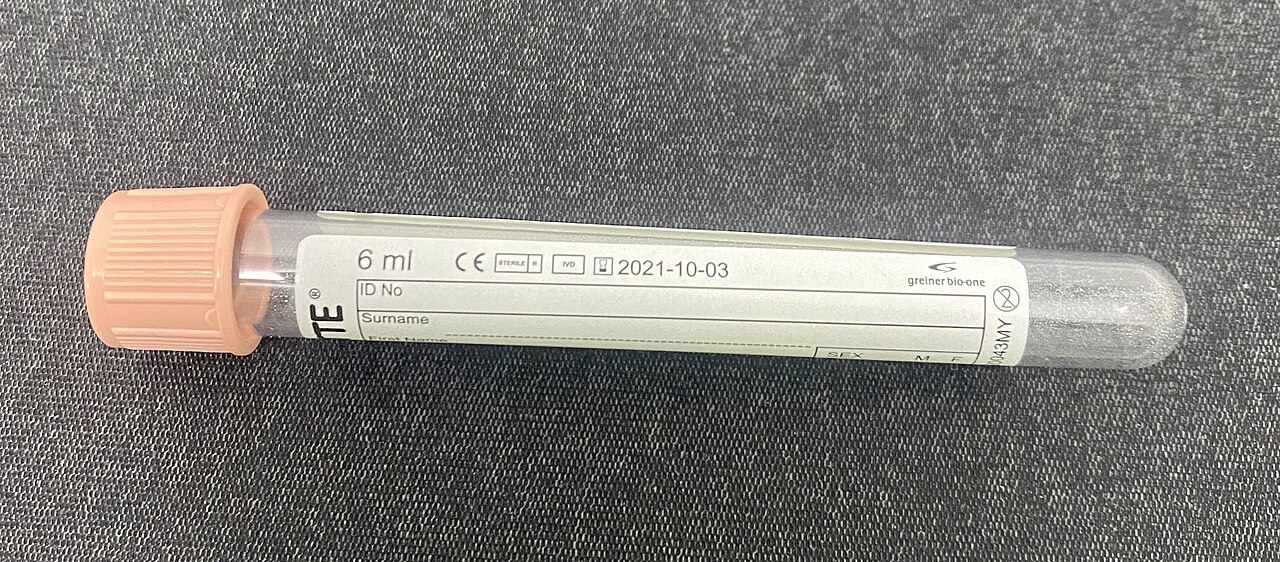
Photograph 1 of 3
Identity belongs to the specimen
These empty identity fields contain no patient information. A real collected specimen needs the approved patient-specific label and verification workflow.
Photo: Whispyhistory. Source · CC BY-SA 4.0.
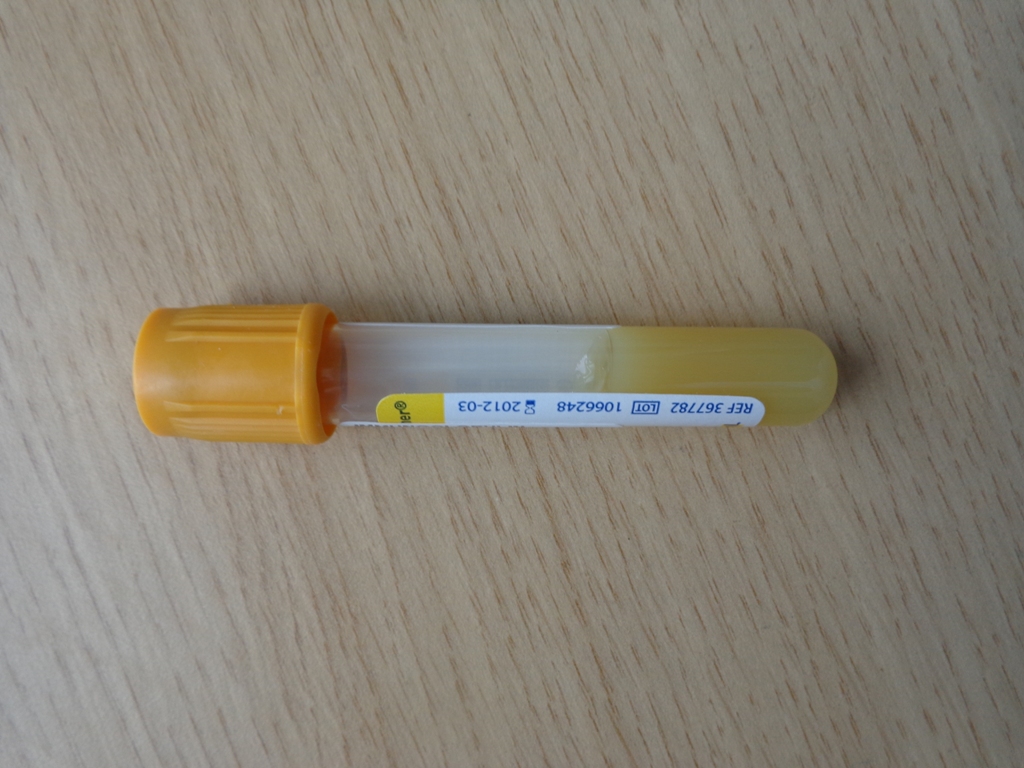
Photograph 2 of 3
A tube is more than its cap
A container photograph supports recognition. Confirm its labeled additive and current instructions before deciding what specimen or test it can support.
Photo: AfroBrazilian. Source · CC BY-SA 3.0.
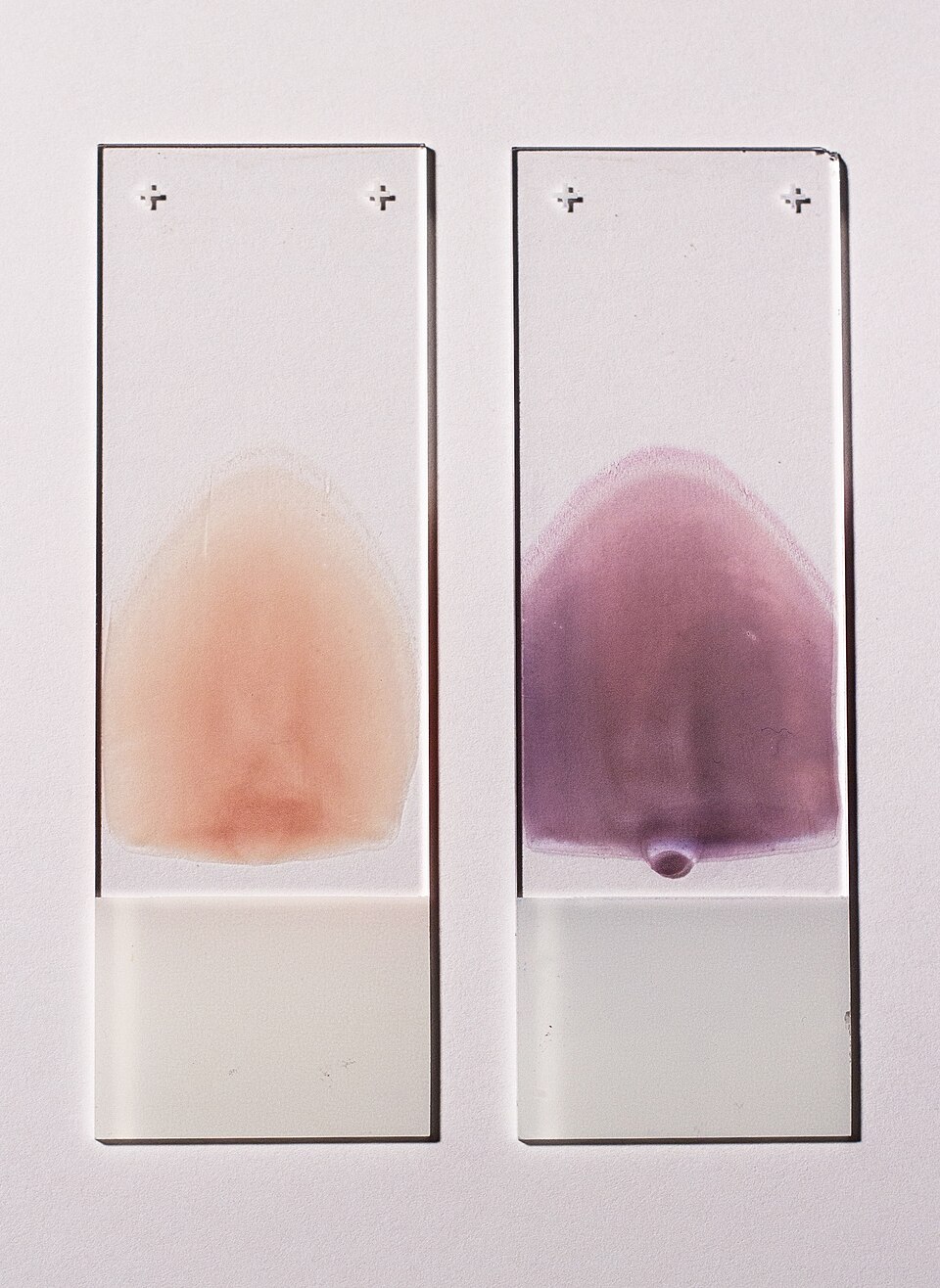
Photograph 3 of 3
Preparation changes what the laboratory can see
Unstained and Wright-Giemsa-stained peripheral blood smears. Preparation supports a later examination; this image alone cannot prove identity, preparation quality, or diagnostic findings.
Photo: Coinmac. Source · CC BY-SA 3.0.
Which information must remain linked when a laboratory creates a secondary preparation?
Keep the approved patient and specimen identity, accession relationship, specimen type, and required processing history linked through the local traceability procedure. A copied cap color cannot preserve that relationship.
Real photographs, source and depiction checked 2026-10-13. Images display in full without cropping. A photo can support observation; use the current procedure and device instructions for clinical work.
Deliberate practice
Learn it, then use it.
These are original study prompts, not recalled certification questions. Answer before opening the rationale.
By the end, you can
- Connect accessioning and aliquoting to patient identity, request, specimen, and handling traceability.
- Recognize an unclear add-on, label, or specimen condition as a reason to pause and verify.
- Use the approved laboratory process rather than making an unlabeled or undocumented secondary specimen.
Decision point
An add-on order arrives after processing, but you cannot confirm that the original specimen is acceptable for the new test. What should you do?
Reveal the best next step and why
Best next step: Preserve the specimen and verify the test-specific add-on requirement with the laboratory before preparing an aliquot.
Why: An aliquot must remain traceable and suitable for the requested test. The laboratory's validated method and current directory define whether the original specimen can be used.
Retrieval practice
1.What must an approved aliquot remain connected to?
The original patient, specimen, request, and preparation history through the approved label and documentation process.
2.What should you do with an unclear accessioning mismatch?
Preserve the facts and contact the laboratory or supervisor rather than correcting it from memory.
Finished reading?
Next: Point-of-care testing quality
Ready to test yourself?
Practice bank · Simulator · Flashcards
Practice with explanations, then return to the topic you need.