Loading your progress…
Why the lab says no.
Why the lab says no. The specimen-rejection reasons in rank order, the one that is an automatic reject, and how to prevent the most common defect of all.
Why this matters
A rejected specimen means a second stick for the patient and a delayed result for the provider. Almost every rejection is preventable at the chairside, which is exactly why the ASCP BOC tests it. Know the reasons in rank order, know the one that is an automatic reject, and you prevent most of them before they happen.
Key takeaways
- Mislabeled or unlabeled is an automatic reject. No exceptions, and the lab does not relabel it. This is the cardinal rule and the reason you label at the bedside, in the patient's presence.
- Hemolysis is the most common preventable defect. Pink-red serum falsely raises potassium, LDH, AST, and magnesium. Causes: too small a needle drawn with force, drawing through a hematoma, vigorous mixing, an underfilled tube, or forcing a transfer.
- A clotted anticoagulant tube is rejected. A clot in a lavender EDTA or blue citrate tube means it was not mixed in time; the blood count or coagulation result is invalid.
- Wrong tube or wrong ratio. The wrong additive, or an underfilled citrate tube that breaks the 9 to 1 ratio, gets rejected. Fill coagulation tubes to the line.
- Quantity not sufficient. Too little volume for the test, common in pediatrics, means a redraw.
- Handling violations. The wrong temperature, separation later than two hours, an expired tube, or blood drawn above an IV can all trigger rejection.
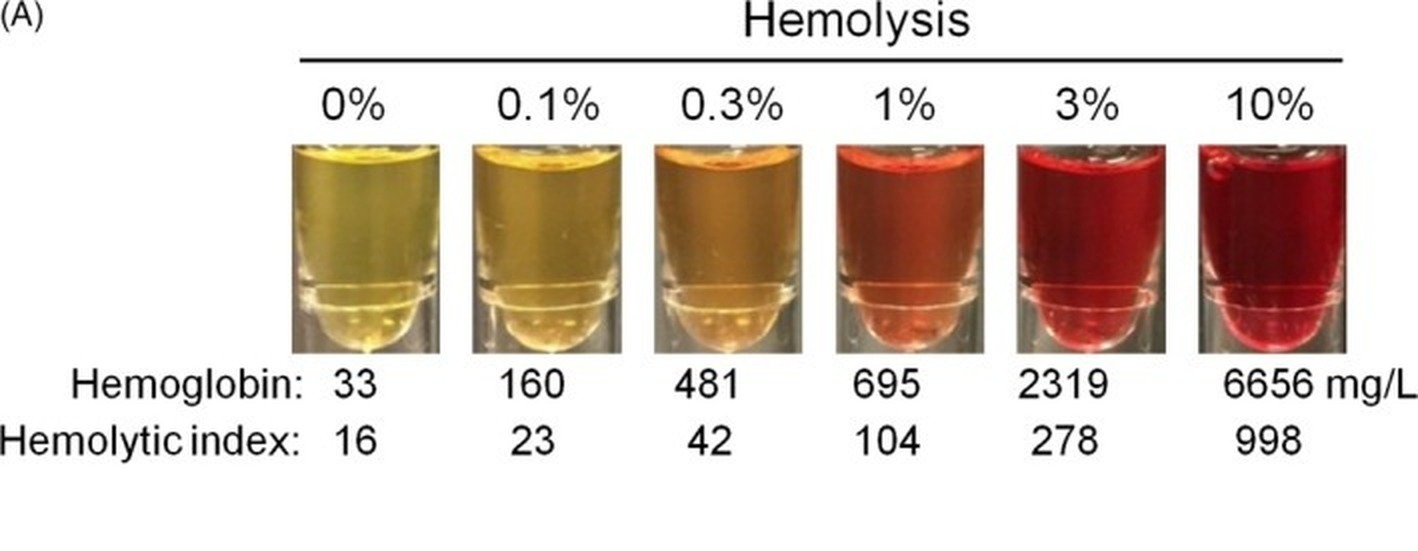
The pattern behind every rejection question: prevention lives at the chairside. Label in the room, fill tubes to the line, invert additive tubes immediately, and choose a needle big enough to avoid hemolysis. The mislabeled tube is the one the lab can never save.
Standards reference: CLSI GP44, Handling and Processing of Blood Specimens, and CLSI GP41-Ed7 for collection. Cross-referenced against the ASCP BOC PBT content guideline, Processing domain. PhlebotomySkills.com is exam-preparation content. Not a degree, not for-credit coursework, and not affiliated with any certifying body.
Finished reading?
Next: Return to study plan
Ready to test yourself?
Practice bank · Simulator · Flashcards
Practice with explanations, then return to the topic you need.