
Loading your progress…
Circulation and blood: follow the route, understand the specimen.
Trace pulmonary and systemic flow, connect blood components to their roles, and use specimen state to reason about an ordered test.
Use direction to name a vessel
An artery carries blood away from the heart; a vein brings it toward the heart. Oxygen content is a separate feature. The pulmonary arteries carry oxygen-poor blood from the right ventricle to the lungs, and the pulmonary veins return oxygen-rich blood to the left atrium. That exception is why memorizing “artery equals oxygen-rich” leads to the wrong explanation.
The circuits connect. Returning blood enters the right atrium, passes to the right ventricle, and travels through the pulmonary circulation. Blood returning from the lungs enters the left atrium, passes to the left ventricle, and leaves through the aorta for the systemic circulation. Valves help keep flow moving in the intended direction. Practice tracing the route before adding names to a diagram.
Trace the route
Two connected circuits.
From the right heart through the lungs
- Right ventricle
- Pulmonary arteries
- Lungs
- Pulmonary veins
- Left atrium
The pulmonary arteries carry oxygen-poor blood away from the heart. After the lungs add oxygen, pulmonary veins return it to the left atrium.
Explain it from memory: why is “all arteries are oxygen-rich” wrong?
An artery carries blood away from the heart. Pulmonary arteries carry oxygen-poor blood toward the lungs; oxygen content alone does not define the vessel.
Connect each component to a function
Red blood cells
Erythrocytes contain hemoglobin for oxygen transport. Their function is different from the immune role of white cells and the hemostatic role of platelets.
White blood cells
Leukocytes participate in immune defense. A differential examines white-cell groups; the collector preserves the ordered specimen for authorized laboratory examination.
Platelets
Platelets are cell fragments that help form the hemostatic response at a damaged vessel. Their role works with the coagulation process; a quiz fact does not determine a particular patient's bleeding risk.
Plasma
The liquid component carries cells and dissolved substances, including proteins involved in coagulation. What a laboratory can measure still depends on the ordered test and preparation.
Whole blood, plasma, and serum answer different questions
Whole blood contains its cellular and liquid components. Anticoagulated blood can be processed to provide plasma. Serum is obtained after clotting and the required separation. These names describe the specimen's state; they are not interchangeable labels for any red liquid in a tube.
A request for a cellular test and a request for a test on separated liquid can have different requirements. Cap color alone cannot settle compatibility. Read the requested specimen type, additive, container, volume, preparation, and stability. Do not infer that a specimen accepted for one assay is acceptable for every add-on.
Cedar Lane Laboratory's CBC procedure requires anticoagulated whole blood. A chemistry specimen has already been processed and only a serum aliquot remains. Copying the original patient's identifiers onto another tube preserves an identity link, but it cannot recreate the original cellular sample. The laboratory must assess the add-on request and direct the next step.
Distinguish the collection type from the appearance
Venous, arterial, and capillary are distinct collection types in the ASCP outline. A specimen's appearance does not establish its collection route or authorize substituting one type for another. The ordered test and approved procedure identify the acceptable type. Performing a collection also requires the appropriate training, authorization, patient assessment, and equipment; recognizing a vessel name does not supply those conditions.
For study, separate three questions: Where does the blood travel? Which components does the test need? What preparation does the laboratory authorize? Confusing those questions leads to errors such as defining arteries by oxygen content, offering serum for a cellular test, or treating a tube photograph as a complete collection instruction.
Explain the decision before you memorize the label
- Route: Trace blood from a chamber to a named vessel and destination, then explain why the vessel is an artery or vein.
- Component: Identify the component and its function before reading a clinical result. Avoid learning one reference interval as universal.
- Specimen: State whether cells remain, whether clotting occurred, and what the ordered method requires. This gives meaning to the words whole blood, plasma, and serum.
- Role: Preserve identity and integrity, report what is known, and use the authorized laboratory or clinical pathway for interpretation and patient-specific decisions.
Sources checked October 13, 2026: NHLBI circulation explanation, updated June 25, 2025; American Society of Hematology: Blood Basics; Labcorp specimen resource. The last source is laboratory-specific. Exact collection and preparation use the applicable current test and device instructions.
Observe, then explain
Look closer.
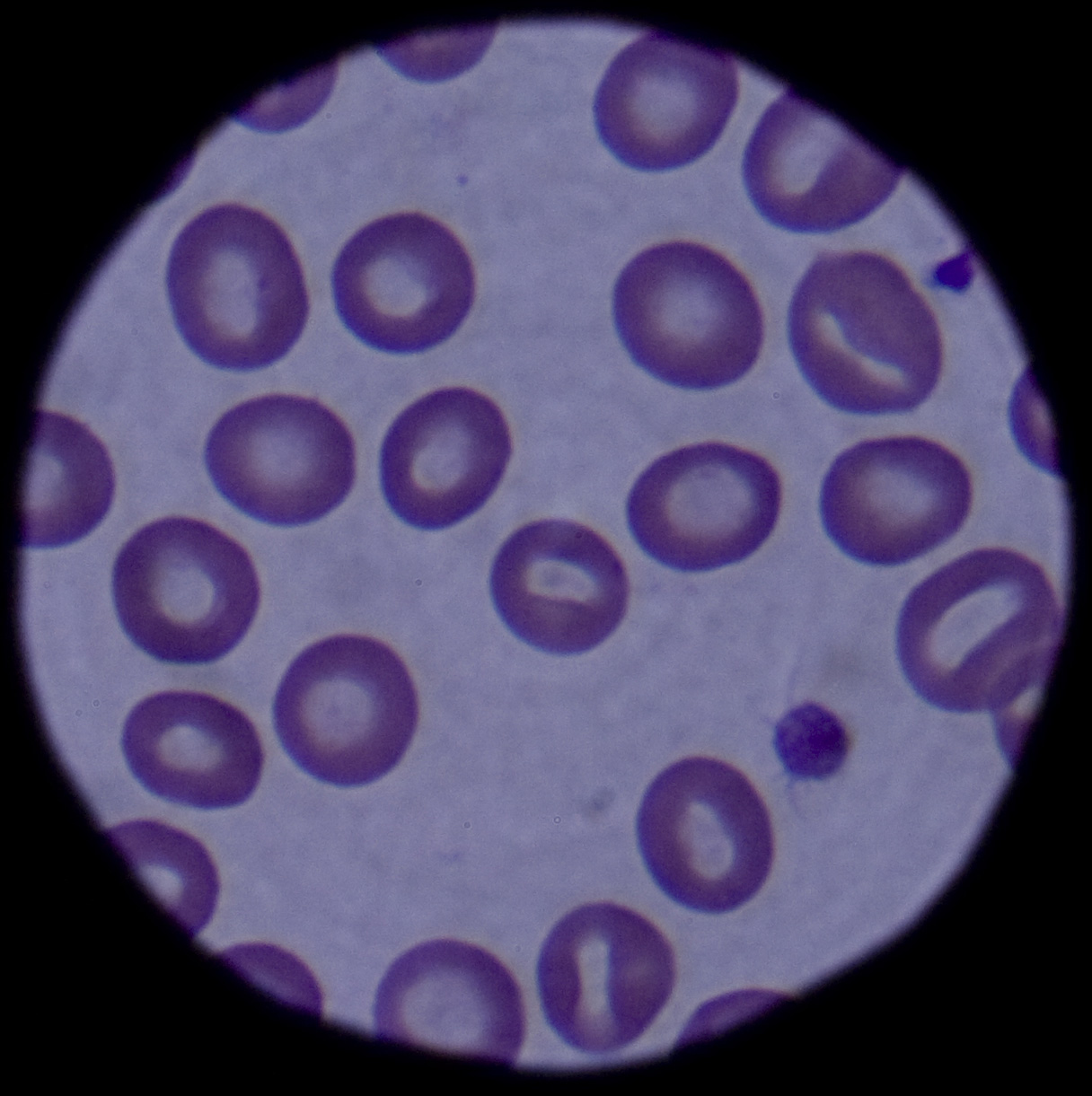
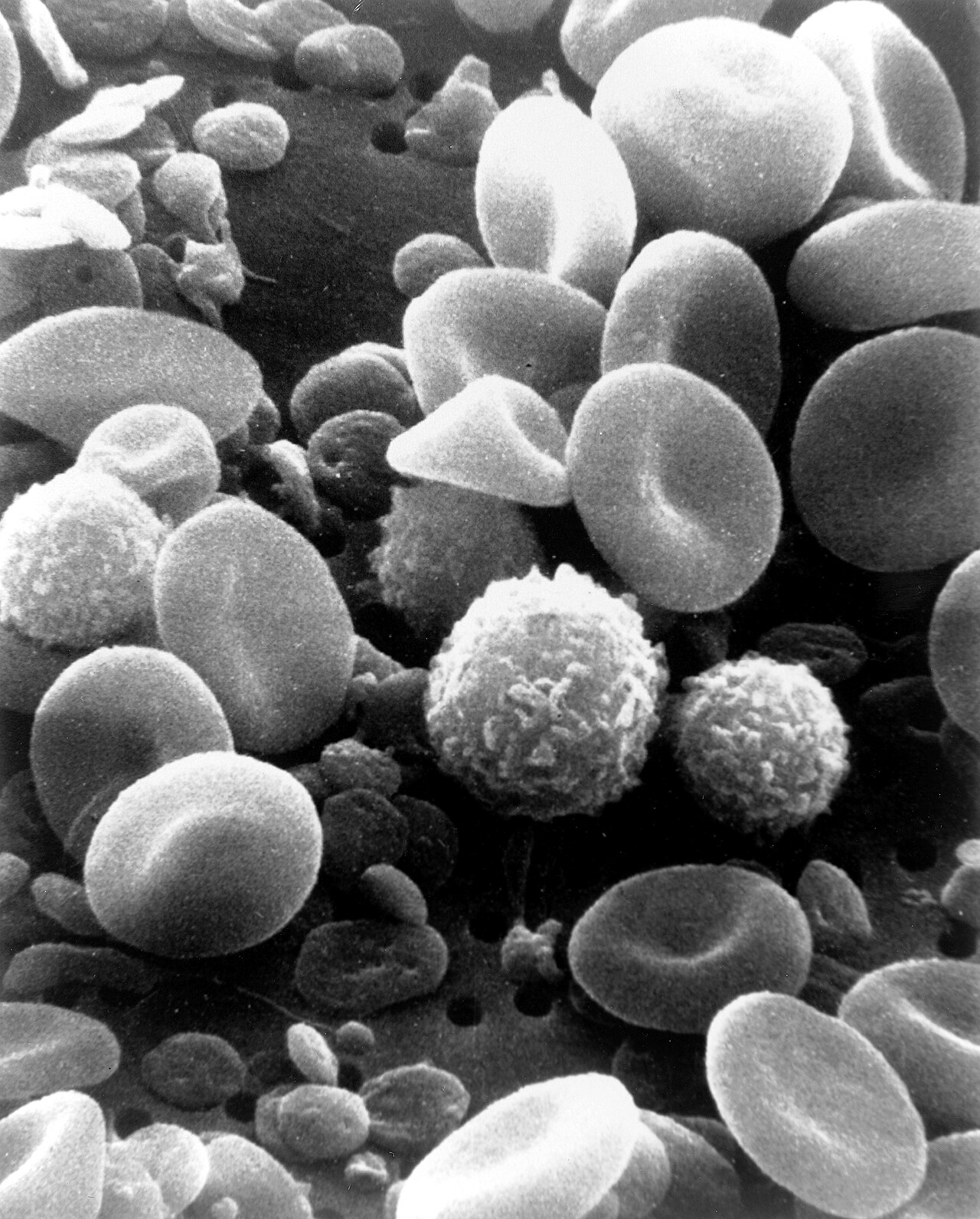
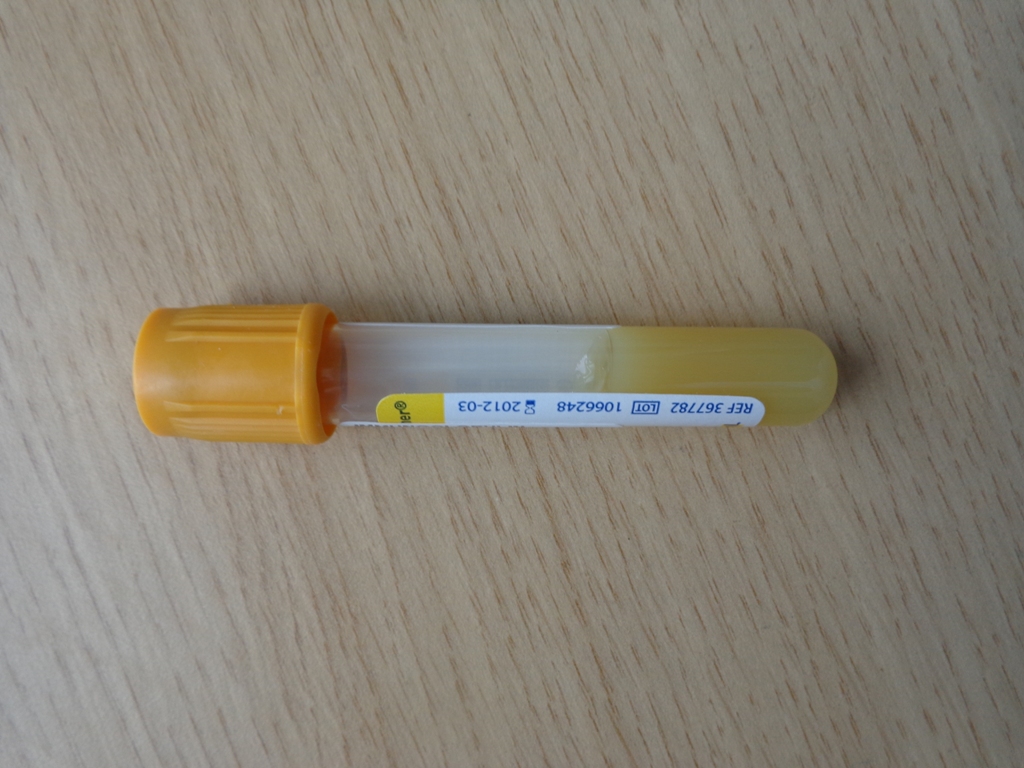
Compare a light micrograph, a labeled scanning-electron micrograph, and a blood-containing tube. Preparation changes the view of the material.
Photograph 1 of 3
Blood through a light microscope
A blood-cell micrograph from a U.S. Air Force laboratory. Magnification and preparation affect appearance; a phlebotomist preserves the specimen for authorized laboratory examination.
Photo: U.S. Air Force / Airman 1st Class Laura Max. Source · Public domain in the United States.
Photograph 2 of 3
Blood cells by scanning electron microscopy
An NCI scanning electron micrograph (SEM). This specialized image shows surface structure; it is not a routine blood-smear view or a diagnostic interpretation exercise.
Photo: National Cancer Institute / Bruce Wetzel and Harry Schaefer. Source · Public domain in the United States.
Photograph 3 of 3
A tube is more than its cap
A container photograph supports recognition. Confirm its labeled additive and current instructions before deciding what specimen or test it can support.
Photo: AfroBrazilian. Source · CC BY-SA 3.0.
Can either micrograph establish a patient's cell count or prove which specimen preparation an ordered test accepts?
No. Magnification, preparation, and imaging method affect appearance. An authorized laboratory method and the ordered specimen requirements establish what can be measured. The photographs support component recognition and observation, not diagnosis or test compatibility.
Real photographs, source and depiction checked 2026-10-13. Images display in full without cropping. A photo can support observation; use the current procedure and device instructions for clinical work.
Deliberate practice
Learn it, then use it.
These are original study prompts, not recalled certification questions. Answer before opening the rationale.
By the end, you can
- Trace the pulmonary and systemic pathways using direction relative to the heart.
- Distinguish the roles of red cells, white cells, platelets, and plasma.
- Use the ordered specimen type to distinguish whole blood, plasma, and serum.
Decision point
A trainee says every artery carries oxygen-rich blood, then offers a separated serum aliquot for a CBC that requires anticoagulated whole blood. Which two concepts need correction?
Reveal the best next step and why
Best next step: Arteries are defined by carrying blood away from the heart; pulmonary arteries carry oxygen-poor blood. A serum aliquot cannot supply the required original cellular whole-blood specimen.
Why: Vessel direction and specimen state are separate concepts. Knowing an anatomy label does not establish test compatibility, and changing a container label cannot recreate the cellular sample.
Retrieval practice
1.What makes a vessel an artery?
It carries blood away from the heart, regardless of whether its blood is oxygen-rich or oxygen-poor.
2.Which preparation distinction separates plasma from serum?
Plasma is obtained from anticoagulated blood; serum follows clotting and the required separation. Use the actual ordered test requirements.
Finished reading?
Next: Patient identification
Ready to test yourself?
Practice bank · Simulator · Flashcards
Practice with explanations, then return to the topic you need.