
Loading your progress…
Capillary collection: choose the method before the sequence.
Separate a meter, microtube, and dried-blood-spot card before making site, sequence, quality, or handoff decisions.
First ask whether this test accepts a capillary specimen
A small sample is not automatically a suitable sample. The ordered test, patient, device, container, and performing laboratory must all support the collection method. A point-of-care meter, a microcollection tube, and a dried-blood-spot card have different specimen and handling requirements. A collector trained on one must not transfer its puncture, first-drop, mixing, or labeling instructions to another.
The NHA CPT test plan lists dermal puncture, capillary order of draw, device selection, and post-collection care as separate knowledge or task statements. The plan names examinable topics; it is not a patient procedure. For clinical work, obtain the current laboratory collection manual, assay and device instructions, and supervised authorization.
Follow the specimen from order to handoff
- Order and identity. Confirm the exact test, acceptable specimen, preparation, patient identifiers, and whether this collector and setting are authorized for the method. Resolve an unclear order before choosing a device.
- Device and site. Select the approved single-use safety device and a patient-appropriate site under the local procedure. A lancet photograph cannot establish safe depth, site, or suitability for a premature infant or adult.
- Collection system. Know whether blood goes to a meter strip, microtube, slide, or filter-paper card. The first-drop instruction and the order for multiple capillary containers are method-specific; do not import a venous mnemonic or another kit's rule.
- Specimen quality. Observe the applicable fill, mixing, and handling instructions. Excessive squeezing, uncertain identity, a clot in a specimen that requires anticoagulation, or an incomplete dried spot may affect acceptability. Preserve the facts and ask the laboratory for disposition.
- Finish and handoff. Use the approved sharps control, assess bleeding and patient condition, apply the appropriate aftercare, and label and route the specimen with its required timing and source information. Escalate a complication through the setting's response process.
One named newborn-screening method
Newborn Screening Ontario's heel-stick method is a specific dried-blood-spot program. It describes a lateral plantar heel site, a device limit for that program, wiping the first drop, and saturating each printed circle with a single application. The card must dry and travel by that program's instructions. Those details illustrate why a named method matters; they are not universal directions for every neonatal test, capillary tube, or point-of-care meter. Do not use this lesson as a procedural checklist on a patient.
Cedar Lane Clinic has orders for a bedside glucose check and a laboratory microtube test. The collector remembers a sequence from dried-blood-spot screening but cannot find the microtube order or the meter's first-drop instruction. The right action is to pause and obtain both current procedures. Neither a familiar lancet nor a neonatal card rule establishes how these two tests should be collected.
Retrieval practice
Prompt: Why can you not apply a single capillary “order of draw” to every meter, card, and microtube?
Answer: The specimen type, additives, device method, and test requirements differ. Verify the actual ordered collection set and its local validated sequence before collecting.
Prompt: A collected microtube is below its stated fill requirement. What should you do?
Answer: Keep its identity and collection facts intact; use the laboratory's acceptability and recollection process. Do not top it up later or assume a smaller volume is harmless.
Scope: this is a source-reviewed reasoning lesson, not hands-on training or an endorsement by NHA or Newborn Screening Ontario. The full paid CLSI collection standards were not inspected. Device IFUs and the authorized local method control patient care.
Observe, then explain
Look closer.
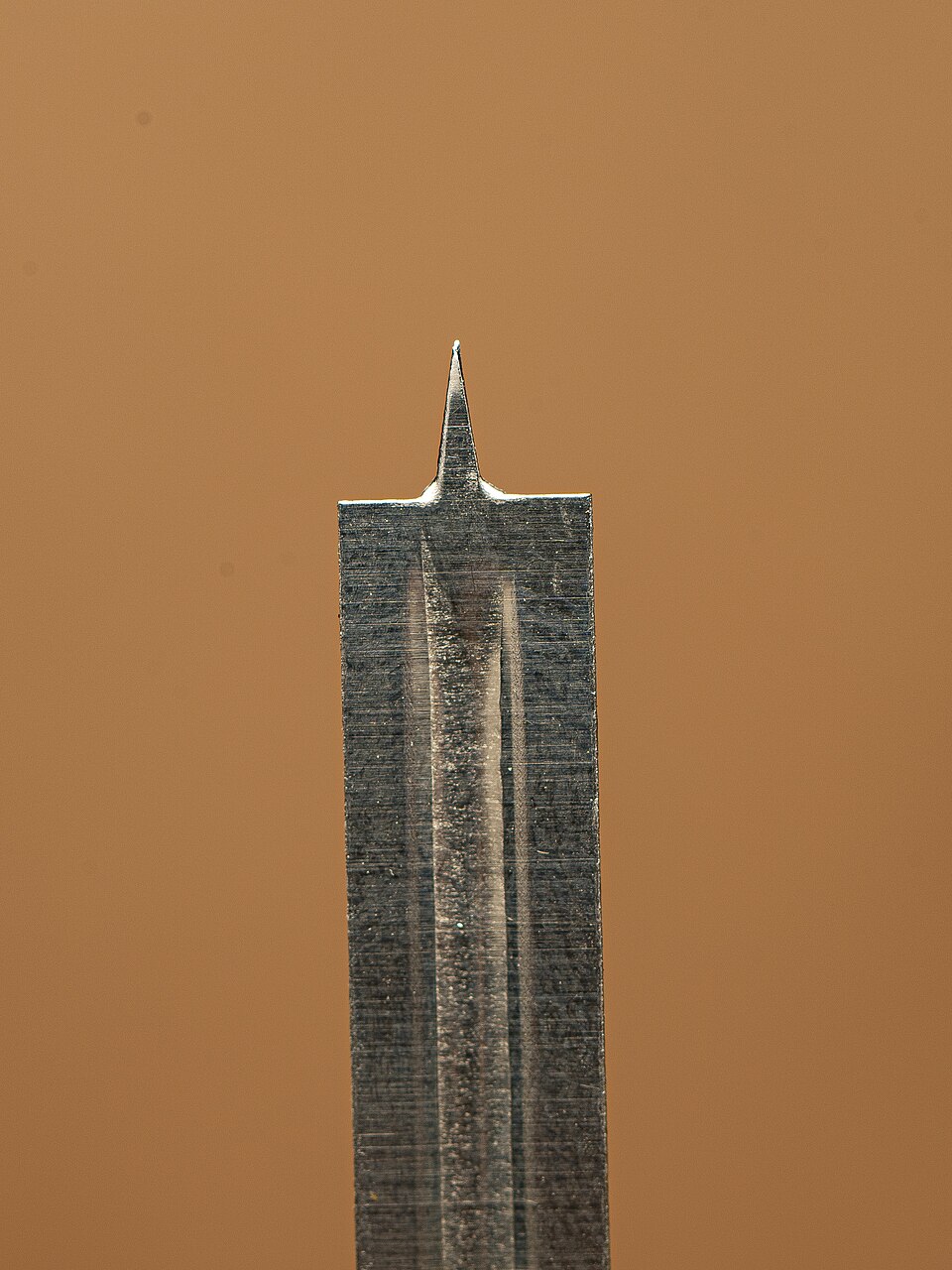
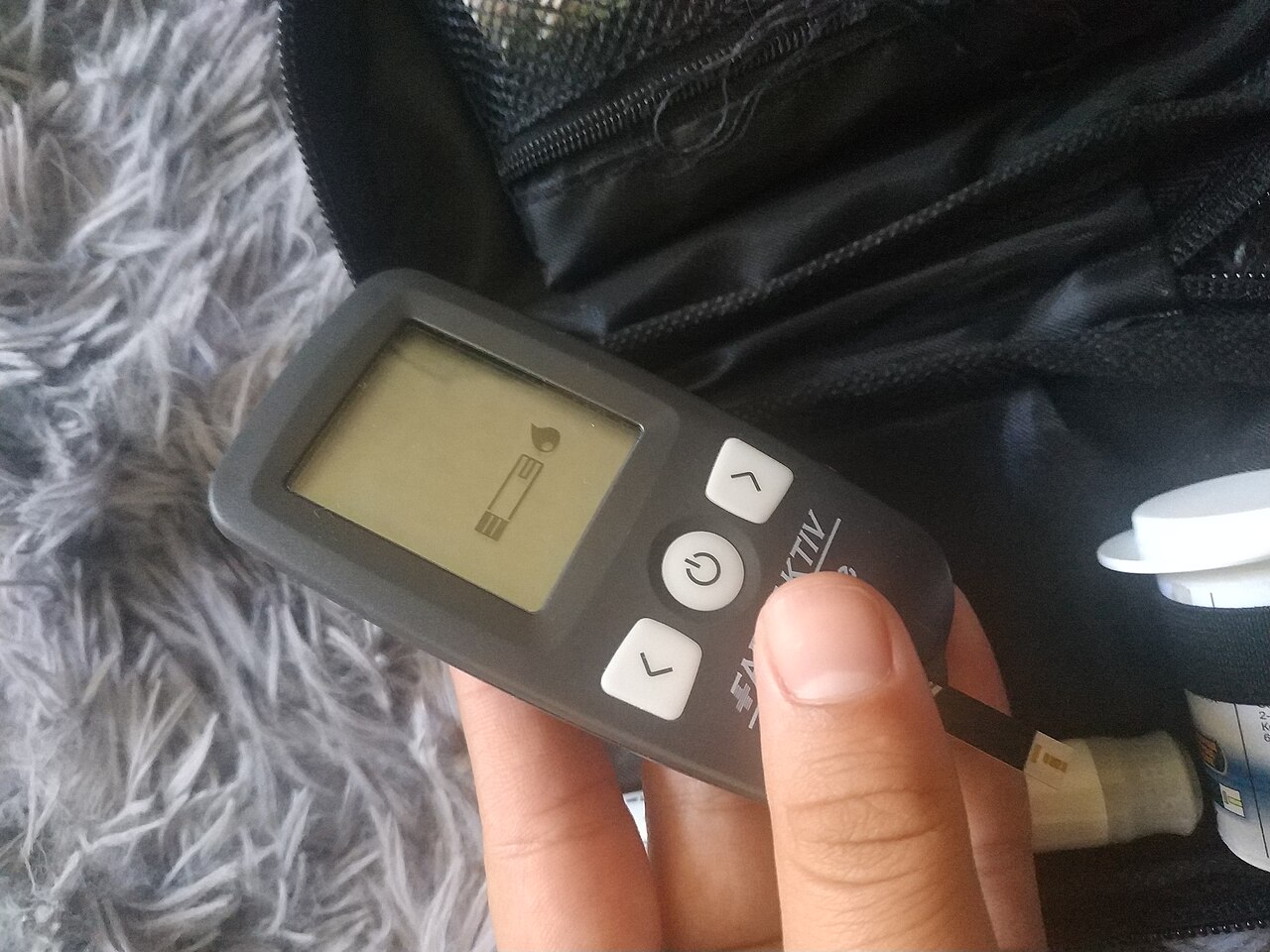
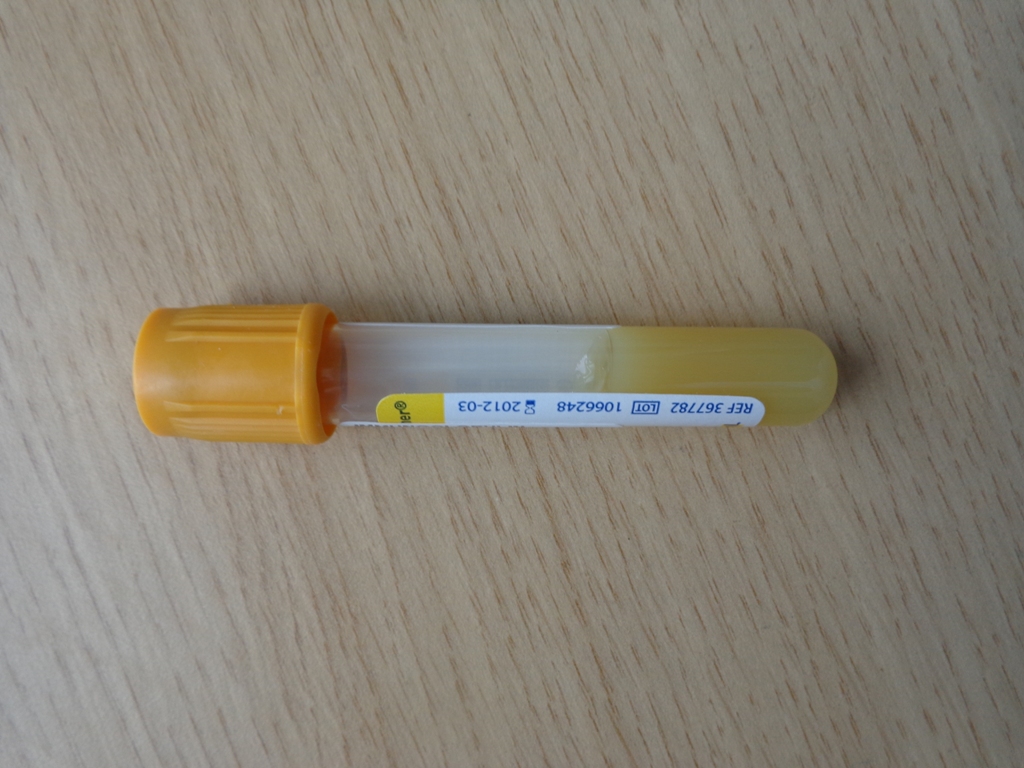
Compare a puncture device, a bedside meter, and a collection tube. The images show equipment, not a validated method or patient-specific site.
Photograph 1 of 3
Recognize an exposed sharp
An exposed metal lancet tip. This is equipment recognition, not a recommendation to use this design; select the approved single-use safety device for the patient and test.
Photograph 2 of 3
A glucose meter and its supplies
A real glucose-meter photograph. Recognize the meter, strip supplies, and display; its appearance does not establish operator authorization, control results, or approval for your testing site.
Photo: Anelya Topoleva. Source · CC BY-SA 4.0.
Photograph 3 of 3
A tube is more than its cap
A container photograph supports recognition. Confirm its labeled additive and current instructions before deciding what specimen or test it can support.
Photo: AfroBrazilian. Source · CC BY-SA 3.0.
Which photographed item tells you the first-drop rule and order of collection for every capillary test?
None. A meter, microtube, and dried-blood-spot card may use different collection instructions. Confirm the exact assay, approved device, specimen requirement, and current local procedure before collecting.
Real photographs, source and depiction checked 2026-10-13. Images display in full without cropping. A photo can support observation; use the current procedure and device instructions for clinical work.
Deliberate practice
Learn it, then use it.
These are original study prompts, not recalled certification questions. Answer before opening the rationale.
By the end, you can
- Check whether the ordered assay accepts a capillary specimen and which collection system it requires.
- Distinguish meter, microtube, and dried-blood-spot rules before choosing a site or sequence.
- Preserve collection and identity facts when volume, quality, or handling is uncertain.
Decision point
A collector remembers the first-drop instruction for newborn screening but cannot find the bedside meter's instruction. Should the card rule be used for the meter?
Reveal the best next step and why
Best next step: No. Pause and use the current meter instructions and local POCT procedure for that test.
Why: The newborn card and meter are different collection and analytical systems. A method-specific first-drop rule cannot be transferred simply because both use capillary blood.
Retrieval practice
1.What comes before choosing a capillary device?
Confirm that the ordered test accepts the capillary specimen, then check patient suitability and the authorized method.
2.What should you do with an underfilled microtube?
Keep the collection facts intact and use the laboratory's acceptability or recollection process; do not guess a correction.
Finished reading?
Next: Pediatric and geriatric draws
Ready to test yourself?
Practice bank · Simulator · Flashcards
Practice with explanations, then return to the topic you need.