
Loading your progress…
Chain of custody: keep the specimen and record together.
Use the governing collection program to track identity, seals, documentation and every handoff without filling gaps from memory.
A clinical label and a custody record answer different questions
A routine specimen label links material to a patient and order. A chain-of-custody process also records who controlled the specimen, when it changed hands, and whether required seals and documents stayed intact. A correct patient name cannot reconstruct an undocumented transfer. Conversely, a signed custody form cannot cure a wrong-patient specimen.
The NHA CPT plan includes chain of custody in processing and drug-screening knowledge. The ASCP PBT guideline includes specimen handling and transport. Neither outline supplies the rules for an individual employer, legal program, assay, or shipping carrier.
Trace the handoffs, then test the weak point
- Choose the governing program. Identify whether the order is routine clinical testing, a federally regulated U.S. DOT collection, another workplace program, or a forensic request. Obtain that program's current form, container, seal, collection, and transport instructions.
- Preserve identity at collection. Use the approved patient or donor verification and collection record. Do not let a batch label, room location, or memory substitute for the required check.
- Document control while it is known. Complete each required date, time, collector, seal, and handoff field at the actual step. Keep the specimen and its associated record linked through storage, courier transfer, accessioning, and any aliquot.
- Check integrity at receipt. An absent seal, mismatch, undocumented interval, damaged container, or inconsistent form needs the program's exception pathway. Record observations; do not invent a missing handoff or reseal without authorization.
- Communicate an exception. Tell the designated supervisor or receiving laboratory promptly. The program determines whether the defect can be documented, whether testing proceeds with a limitation, or whether recollection is required.
A named DOT example has narrow scope
For a federally regulated U.S. DOT urine collection, 49 CFR 40.71 directs the collector to secure the split bottles with tamper-evident seals, date them, and have the employee initial them. If the employee refuses to initial, the collector documents the refusal in the Custody and Control Form's Remarks field. This is one program's procedure. A general clinical urine test or another drug-testing program may use different containers, forms, and exception rules.
At fictional Cedar Lane Clinic, a sealed specimen arrives with a transfer time missing from a required custody form. A colleague suggests entering the courier's usual pickup time. Preserve the original record and the specimen, document the observed gap, and use the program's exception process. A plausible time is not evidence of the actual handoff.
Retrieval practice
Prompt: Which event turns a labeled sample into a complete custody trail?
Answer: No single event. Each required control and transfer must be recorded under the governing program from collection through receipt and disposition.
Prompt: Can a new seal repair an unexplained gap in custody?
Answer: It cannot establish what happened during the gap. Report and document the discrepancy through the authorized exception process.
Scope: the DOT example applies to the cited federally regulated urine collection. This lesson does not define legal admissibility, direct forensic practice, or replace a clinical laboratory's acceptance policy.
Observe, then explain
Look closer.
Compare ordinary specimen containers with a nonclinical security bag that visibly shows tamper evidence. No image proves a specimen was collected under a particular custody program.
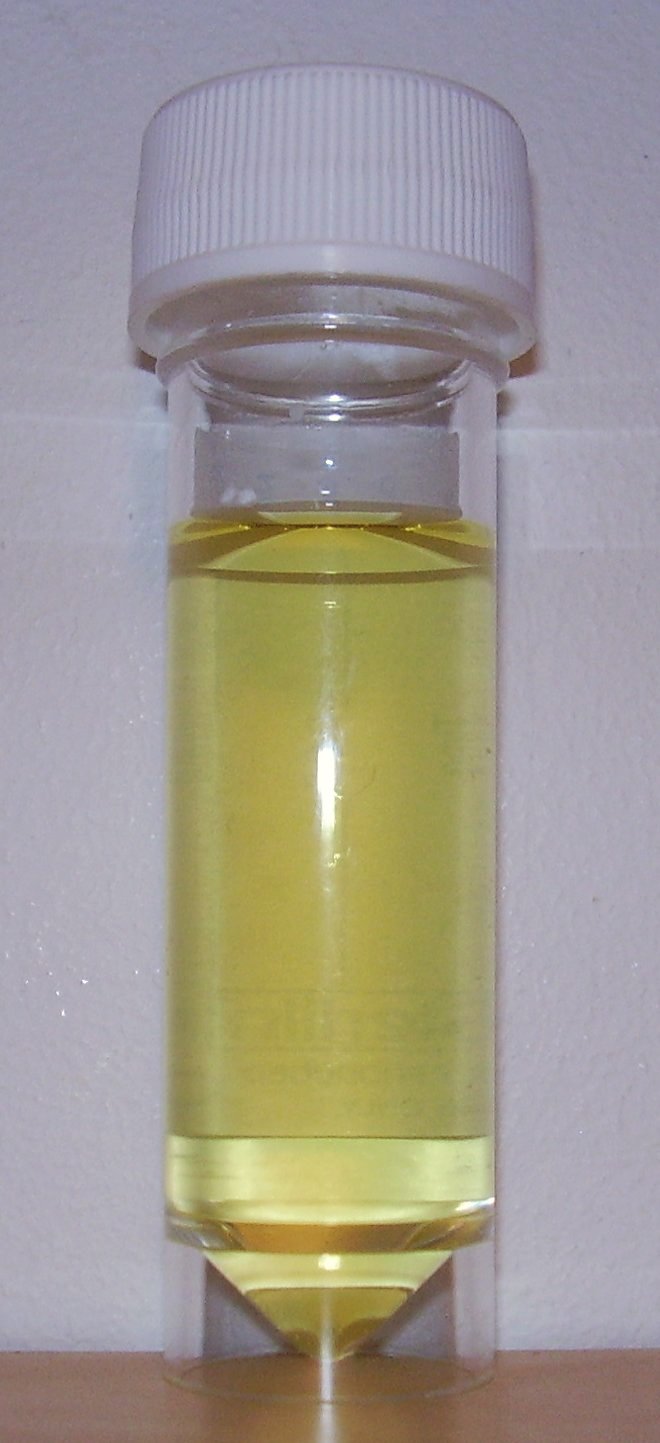
Photograph 1 of 3
Appearance is only one observation
An unlabeled photographed urine sample. Color does not establish collection method, identity, infection, timing, preservative, or acceptability.
Photo: Markhamilton at English Wikipedia. Source · Public domain.
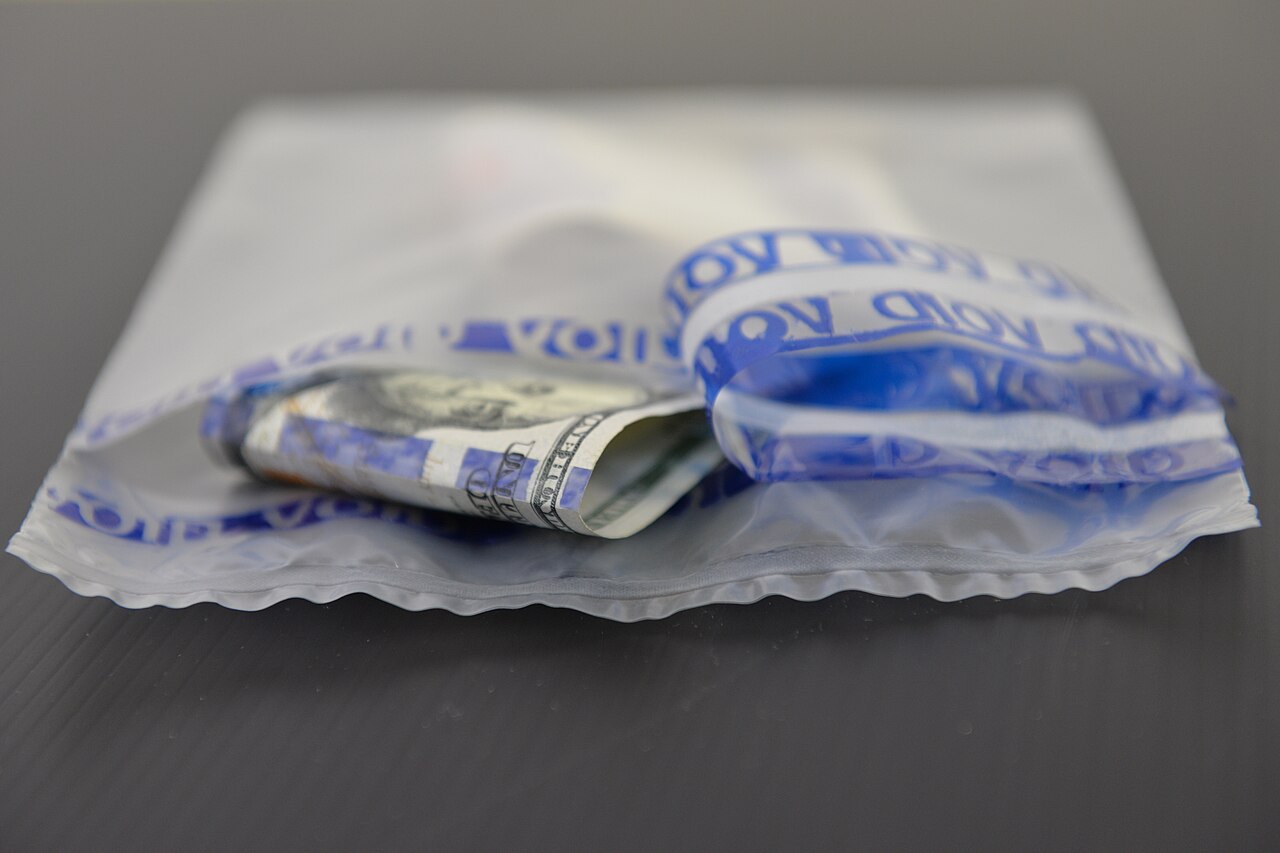
Photograph 2 of 3
A tamper-evident security-bag example
This is a cash security bag, not an approved clinical collection kit. The photograph illustrates visible tamper evidence only; a custody program specifies its own seal, identifiers, record, and handoffs.
Photo: Btamevi. Source · CC BY-SA 4.0.
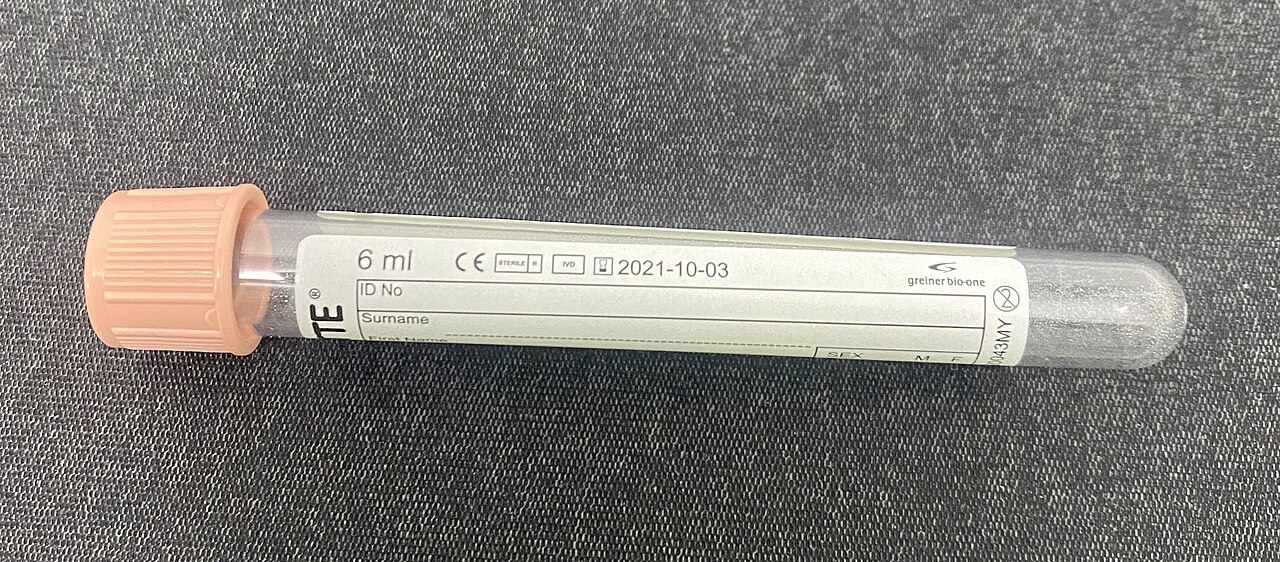
Photograph 3 of 3
Identity belongs to the specimen
These empty identity fields contain no patient information. A real collected specimen needs the approved patient-specific label and verification workflow.
Photo: Whispyhistory. Source · CC BY-SA 4.0.
Can the photographed VOID seal or an unlabeled container prove that a required custody handoff occurred?
No. The security bag is a cash-handling example; a clinical program specifies its own seal and documentation. Appearance cannot supply the patient or donor verification, collector, transfer time, or exception record.
Real photographs, source and depiction checked 2026-10-13. Images display in full without cropping. A photo can support observation; use the current procedure and device instructions for clinical work.
Deliberate practice
Learn it, then use it.
These are original study prompts, not recalled certification questions. Answer before opening the rationale.
By the end, you can
- Distinguish a specimen identity label from a complete record of control and transfers.
- Identify a missing seal, mismatched form, or undocumented handoff as an exception to report.
- Keep program-specific rules, including U.S. DOT urine collection, in their proper scope.
Decision point
A required courier transfer time is blank. Should you enter the courier's usual pickup time to complete the form?
Reveal the best next step and why
Best next step: No. Preserve the specimen and original record, document the observed gap, and use the governing program's exception pathway.
Why: A routine schedule is not evidence of an actual transfer. Inventing a time conceals the gap needed for an authorized disposition decision.
Retrieval practice
1.What must stay linked through every required custody transfer?
The identified specimen, required seals and documentation, actual handoff information, and the governing program's record.
2.Can a new seal reconstruct an earlier undocumented interval?
No. Report the discrepancy and use the program's authorized exception process.
Finished reading?
Next: Laboratory quality systems
Ready to test yourself?
Practice bank · Simulator · Flashcards
Practice with explanations, then return to the topic you need.