
Loading your progress…
What's on the ASCP PBT exam.
Six blueprint areas, 80 questions, two hours, computer-adaptive delivery. Use the official ranges to make a balanced study plan—not to predict a score.
The format, in one paragraph
The ASCP BOC Phlebotomy Technician (PBT) certification examination is 80 one-best-answer multiple-choice questions delivered in a two-hour computer-adaptive testing format. Passing uses ASCP BOC scaled scoring, not a fixed percentage. The current content guideline publishes six blueprint areas with percentage ranges. Those ranges guide preparation; they do not predict the exact mix or score of an individual adaptive exam.
Where the weight is
- Specimen Collection (45–50%). This is the largest area: orders, patient preparation and identification, site selection, techniques, common tests, order of draw, complications, and equipment.
- Specimen Handling, Transport, and Processing (15–20%). Acceptability, labeling and accessioning, centrifugation and aliquoting, transport, storage, and environmental conditions.
- Laboratory Operations (15–20%). Quality systems, competency, professional ethics, laboratory and safety regulations, and interpersonal practice.
- Circulatory System, Waived/POCT, and Non-Blood Specimens (5–10% each). These are distinct ASCP areas; do not let a strong venipuncture score hide a gap in foundational anatomy, point-of-care workflow, or non-blood collection.
For the exact official content outline, use the ASCP BOC guideline directly. Start with Specimen Collection, then deliberately schedule the other five areas so that a lower-weight domain does not become an avoidable weak point.
Transparent study planning
ASCP PBT study-map coverage
ASCP publishes ranges for its 80-item computer-adaptive exam. This map does not reproduce its adaptive selection, predict scoring, or claim complete coverage. ASCP mode provides an 80-item fixed study form across these six areas; it does not reproduce official CAT or scaled scoring. NHA mode provides 100 scored and 20 unscored study items.
Circulatory System
5–10%Available lessons:Circulation and blood components
Remaining gap: Still needed: supervised vascular-landmark identification and deeper practice with arterial, venous, and capillary specimen differences.
Specimen Collection
45–50%Available lessons:First venipunctureOrder of drawTube selection and additivesPatient identificationSite selectionPediatric and geriatric drawsCapillary collection decisionsSpecial collection programs
Remaining gap: Still needed: supervised capillary practice, more order and complication variants, and post-collection instruction under a local procedure.
Specimen Handling, Transport, and Processing
15–20%Available lessons:Centrifugation and processingTemperature and light handlingSpecimen acceptabilityAccessioning and aliquotingChain of custodySpecial collection programs
Remaining gap: Still needed: applied add-on decisions, hands-on aliquoting technique, and program-specific special-sample custody practice.
Waived and Point-of-Care Testing
5–10%Available lessons:Point-of-care testing quality
Remaining gap: Still needed: device-specific test performance, troubleshooting, maintenance, and quality-control practice under the local POCT program.
Non-Blood Specimens
5–10%Available lessons:Non-blood specimens
Remaining gap: Still needed: specimen-specific instruction and collection practice for urine, stool, sputum, swabs, and breath testing.
Laboratory Operations
15–20%Available lessons:Bloodborne pathogensPPE protocolsSharps and incident reportingHIPAA basicsLaboratory quality systemsSpecial collection programs
Remaining gap: Still needed: nonwaived proficiency-testing requirements, hands-on competency assessment, coding and billing, and broader safety regulations.
Source: ASCP BOC PBT examination content guideline (revised September 25, 2025).
Use the map as a diagnostic, not a score predictor. Start from an official domain, choose an available lesson, identify the named gap, and return to the official guideline for the complete task list. That creates a study plan without pretending that a practice site can reproduce an adaptive certification exam.
What this lesson is, and what it isn't
This lesson is the orientation, not a claim that every official content statement is already taught here. The map shows the available starting points and the remaining curriculum gaps explicitly. Treat it as a way to plan what to learn next, then use the official guideline for the complete content outline.
Source: ASCP BOC PBT Examination Content Guideline (revised September 25, 2025). The coverage map is a study aid, not a reproduction of exam questions, a scoring simulator, or an affiliation claim. PhlebotomySkills.com is exam-preparation content, not for-credit coursework.
Technical application
Study applied knowledge across the six areas
- Use a separate ASCP map rather than assume NHA coverage is identical.
- Connect collection to handling, POCT, nonblood and operations.
- Interpret a fixed study form as practice evidence.
Collection extends beyond the puncture
A specimen-collection case can begin with an order or patient history and end with a handling, reporting or quality question. Follow the complete event rather than treating the needle step as the whole subject. A mistake in identity or specimen preparation can make a technically smooth collection unusable.
The separate ASCP map helps organize these relationships. Review the actual content guideline, then connect each area to lesson explanations and cases. A shared lesson can support more than one exam without proving that every objective in both outlines has been taught or assessed.
Build comparisons across areas
Compare an incorrect container with a correct container that has a timing deviation. Compare a passing control with an incorrect patient identifier. Compare a patient specimen with an external quality challenge. These cases teach why one acceptable fact cannot stand for the complete workflow.
Use terminology precisely. The same letter abbreviation or container color can hide a different measurement, method or program. Explain the requested material and decision before selecting the memorized answer. Where the case supplies a method, apply that method's stated facts rather than replace them with a generic rule.
A practice form is a sample of learning evidence
A fixed study form has a defined selection of original items. Familiarity with a shared practice pool can improve a repeat score without establishing the same amount of new evidence. Track distinct applications and identify where the format or content has been seen before.
The official adaptive examination and its scaled scoring are not reproduced by a fixed raw-percentage practice form. Use practice feedback to select review, not to manufacture an official equivalent. A useful next step is a new case in the weak area followed by explanation and delayed retrieval.
| Learning task | What it checks |
|---|---|
| Explain a mechanism | Understanding of why a decision matters |
| Compare two cases | Recognition of the controlling difference |
| Read a supplied method | Application of the actual conditions |
| Revisit later | Retention beyond immediate answer recognition |
Work the case before revealing the explanation
Which fact controls the decision?
A learner has reviewed collection technique but repeatedly confuses an invalid rapid test with a negative result.
Read the decision and its mechanism
Decision: Review the POCT interpretation explanation and apply a new control/result case instead of repeating collection-only practice.
Why: One strong area does not compensate for an unexamined area in the learning map.
Now change the facts
The same learner recognizes a valid rapid-test interpretation but cannot trace an aliquot to its original sample.
Compare your changed decision
Move to specimen identity and handling cases. The next task should follow the actual error pattern.
Check your reasoning
Answer aloud or in writing before opening each explanation. Return to these questions in a later study session.
Can one course lesson serve two exam maps?
Yes, but the taught and assessed objectives must be checked separately.
What does a repeat score from familiar questions fail to establish?
How much new, transferable understanding was demonstrated.
Keep these distinctions
- Study the complete specimen event.
- Use a distinct ASCP map.
- Treat study feedback as study feedback.
Observe, then explain
Look closer.
Recognize examples of circulation, blood collection, and nonblood specimens on the separate ASCP blueprint.
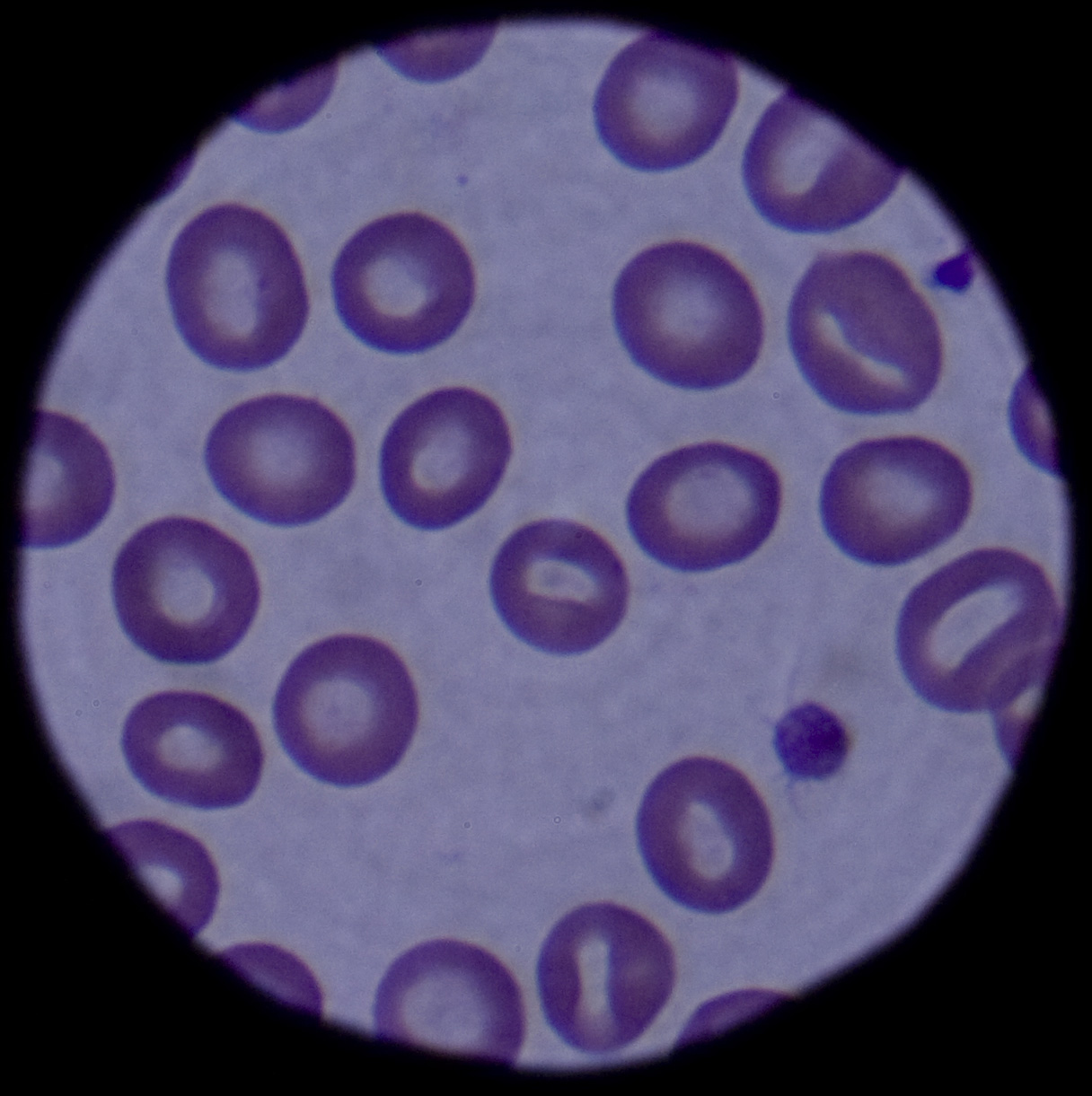
Photograph 1 of 3
Blood through a light microscope
A blood-cell micrograph from a U.S. Air Force laboratory. Magnification and preparation affect appearance; a phlebotomist preserves the specimen for authorized laboratory examination.
Photo: U.S. Air Force / Airman 1st Class Laura Max. Source · Public domain in the United States.
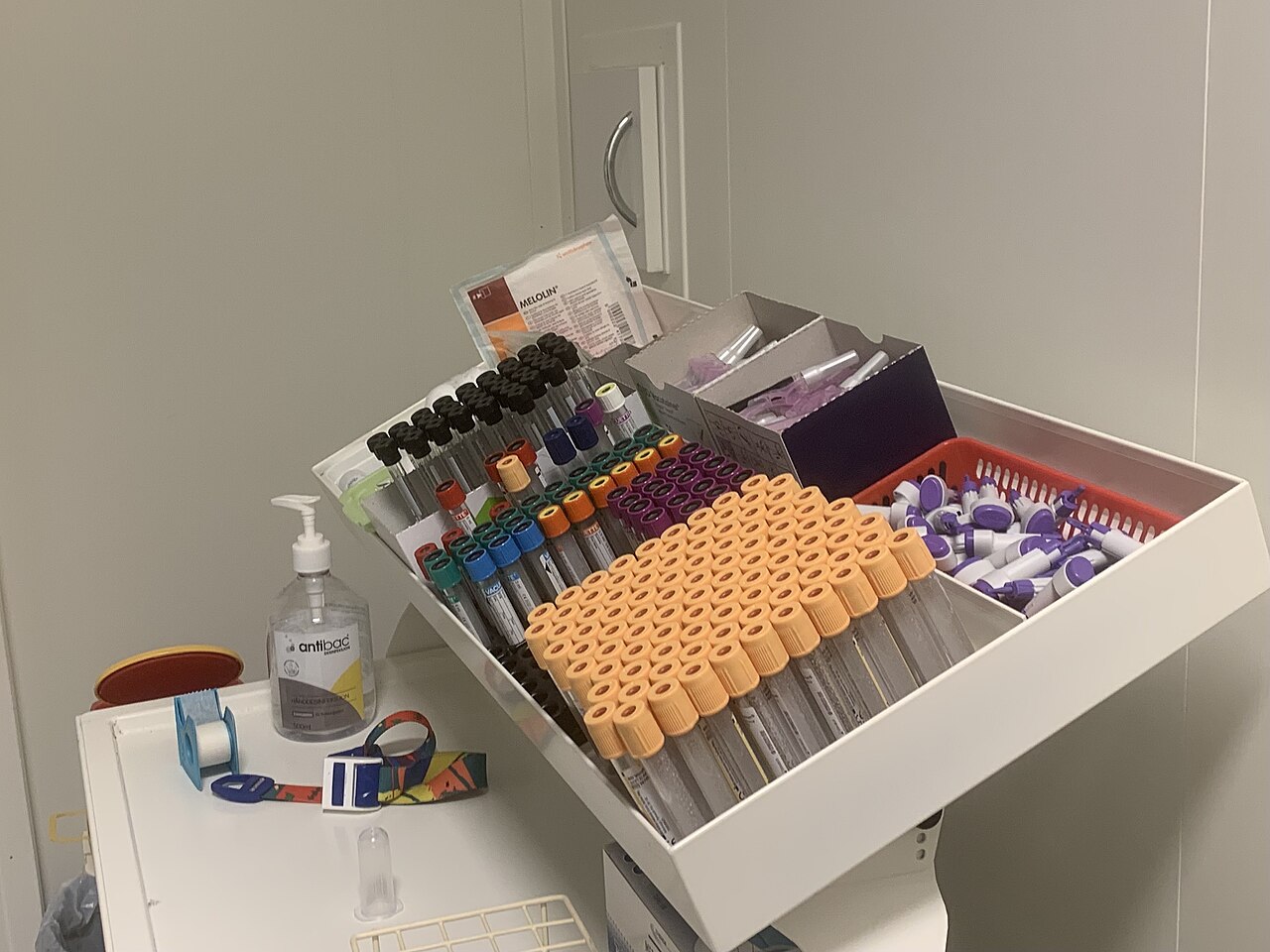
Photograph 2 of 3
Supplies before collection
A real clinic supply area in Norway. Recognize the equipment, then verify the local container, storage, cleaning, and collection requirements.
Photo: Marius Vassnes. Source · CC BY-SA 4.0.
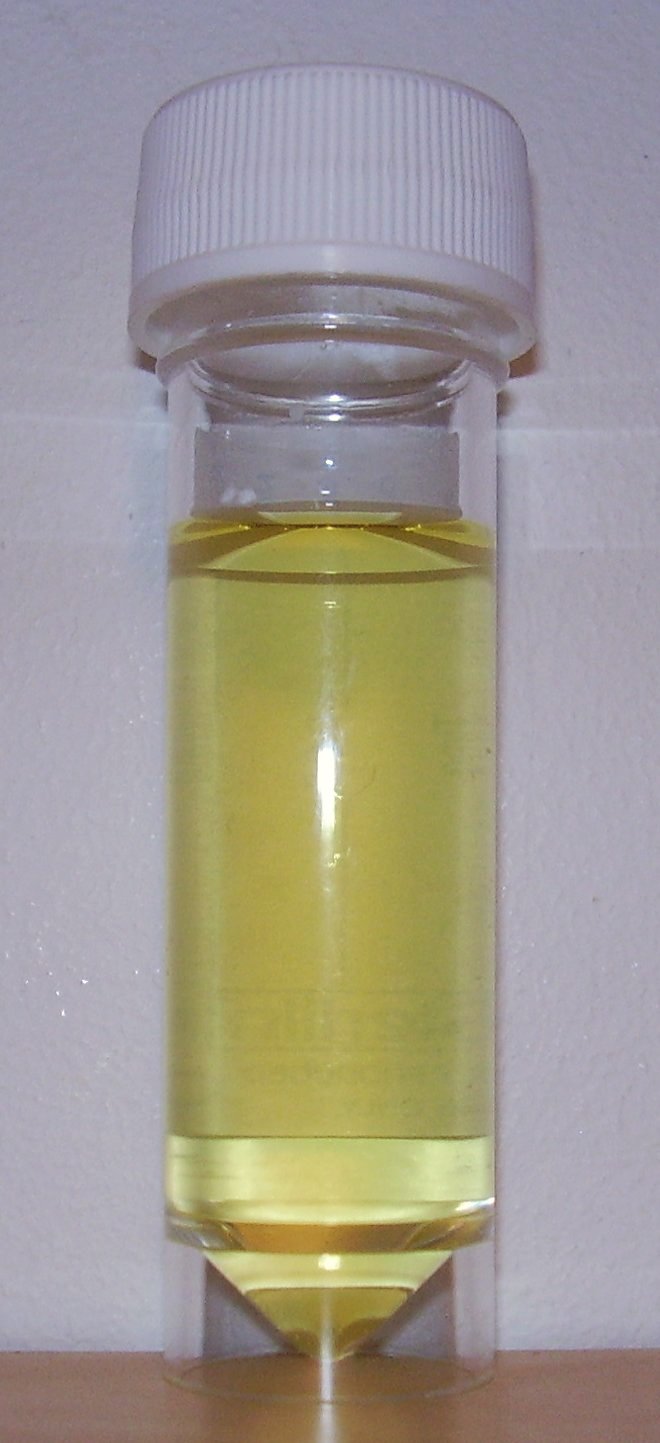
Photograph 3 of 3
Appearance is only one observation
An unlabeled photographed urine sample. Color does not establish collection method, identity, infection, timing, preservative, or acceptability.
Photo: Markhamilton at English Wikipedia. Source · Public domain.
Why should you study the blood-cell and urine images as well as the collection equipment?
The ASCP outline includes the circulatory system and nonblood specimens alongside collection. Recognizing the equipment alone leaves those domains unaddressed.
Real photographs, source and depiction checked 2026-10-13. Images display in full without cropping. A photo can support observation; use the current procedure and device instructions for clinical work.
Deliberate practice
Learn it, then use it.
These are original study prompts, not recalled certification questions. Answer before opening the rationale.
By the end, you can
- Use a content outline to organize study time without predicting live exam questions.
- Distinguish credential eligibility rules from clinical procedure rules.
- Plan a review cycle that includes retrieval practice and error analysis.
Decision point
A classmate says a social-media post lists the exact topics that will appear next week. What should you use to plan your study instead?
Reveal the best next step and why
Best next step: Use the current official ASCP BOC materials and your own error patterns, then practice the underlying safety and specimen-handling decisions.
Why: Official materials describe the credential and its framework. Third-party predictions are not a reliable source of live-exam content and can pull time away from transferable clinical reasoning.
Retrieval practice
1.What is the purpose of a content guideline?
To organize study coverage, not to disclose specific live questions.
2.What makes a practice question valuable?
Its rationale explains the safer or more appropriate decision, not just a letter choice.
Put this lesson into practice.
Try the sample questions, or unlock all lessons and listening paths.
Finished reading?
Next: Circulation and blood components