
Loading your progress…
What's on the NHA CPT exam.
Five domains, 120 questions, two hours, scaled-score pass. Your orientation to the exam most phlebotomy students actually sit, and how to spend your study time.
The format, in one paragraph
The NHA Certified Phlebotomy Technician (CPT) exam is a computer-based test of 120 questions: 100 scored items and 20 unscored pretest items, with a two-hour time limit. NHA reports a scaled score rather than a raw percentage, and the passing standard is a scaled score of 390. The current test plan is based on NHA’s 2024 job analysis. Its five-domain summary specifies the 100 scored items in each domain; pretest items are not a promise about the domain mix on an individual exam.
Where the weight is
Two domains, Routine Blood Collections and Safety and Compliance, make up 54 percent of the exam between them. If your study time is limited, that is where it should go first. Patient Preparation is the next priority, and on the NHA exam this domain is broader than just talking to the patient: it includes verifying the order and requisition, confirming consent, checking fasting status, and the registration and insurance steps that NHA tests and many other exams do not.
How we organize the material
- Routine Blood Collections (28%). Equipment selection, tourniquet technique, site selection, order of draw, complications, capillary collection. The single largest domain.
- Safety and Compliance (26%). OSHA and bloodborne pathogens, PPE, sharps and biohazard handling, HIPAA, quality control, incident reporting.
- Patient Preparation (20%). Order and requisition verification, patient identification, consent, fasting and testing requirements, registration and billing basics.
- Processing (14%). Centrifugation, aliquoting, time and temperature limits, chain of custody, specimen integrity and rejection.
- Special Collections (12%). Blood cultures, point-of-care testing, tolerance tests, blood donation, drug and alcohol collection with chain of custody.
For the exact task and knowledge statements behind each domain, read the official NHA CPT test plan. Either way, treat Routine Blood Collections and Safety as your highest-yield study time.
Transparent study planning
NHA CPT study-map coverage
NHA lists 100 scored items across these domains; the remaining 20 pretest items are unscored. The site’s timed mock uses these scored-domain weights with original practice items. "Available lessons" identifies starting points, not complete domain coverage or an official NHA exam.
Safety and Compliance
26 items · 26%Available lessons:Bloodborne pathogensPPE protocolsSharps and incident reportingHIPAA basicsPoint-of-care testing quality
Remaining gap: Still needed: infection-control detail, emergency response, equipment logs, and broader device-specific POCT practice.
Patient Preparation
20 items · 20%Available lessons:Patient identificationFirst venipunctureSite selection
Remaining gap: Still needed: fuller consent and guardian workflows, order-specific preparation examples, registration checks, and broader non-blood patient instructions.
Routine Blood Collections
28 items · 28%Available lessons:Order of drawTube selection and additivesSite selectionPediatric and geriatric drawsCapillary collection decisions
Remaining gap: Still needed: supervised capillary technique and device-specific sequence practice, equipment quality checks, complication response, and post-collection care.
Special Collections
12 items · 12%Available lessons:Pediatric and geriatric drawsDifficult drawsNon-blood specimensCapillary collection decisionsSpecial collection programs
Remaining gap: Still needed: supervised, program-specific culture and donor procedures, complete newborn-screening workflows beyond the Ontario example, more tolerance-test variations, and drug/alcohol collection programs.
Processing
14 items · 14%Available lessons:Centrifugation and processingTemperature and light handlingSpecimen acceptabilityAccessioning and aliquotingChain of custody
Remaining gap: Still needed: program-specific custody practice, add-on and aliquoting decisions, transport packaging, and shipment documentation.
NHA likes to test one fact two ways. Order of draw shows up as a straight sequence question and as a "this result is wrong, why" question. Learn the reasoning once and you answer both. We rebuild that skill in the order-of-draw and tube-color lessons.
Taking the ASCP PBT instead? It is a shorter, scaled exam with a different weighting. Here's what's on the ASCP PBT exam.
Source: NHA Certified Phlebotomy Technician (CPT) test plan, based on the 2024 job analysis. The coverage map is a transparent study aid, not a claim of complete blueprint coverage or affiliation with NHA. PhlebotomySkills.com is exam-preparation content, not for-credit coursework.
Technical application
Turn the outline into a useful study method
- Distinguish blueprint coverage from a predicted exam.
- Use errors to select the next learning task.
- Separate study performance from clinical competency.
Map the task, not just the topic word
A topic label can conceal several different abilities. Recognizing the word centrifuge is not the same as distinguishing force from speed, applying a supplied timing requirement or preserving aliquot identity. When you study a domain, ask which decision you should be able to explain without seeing the answer.
Use each lesson's objectives to choose an action: describe the mechanism, interpret a supplied document, order a sequence, calculate a stated quantity or identify the fact that changes a decision. This makes a study map useful without pretending it discloses future exam questions.
Use a short error-analysis loop
After a missed question, record the reason for the miss. Did you misunderstand a term, overlook a supplied condition, confuse specimen states or use a rule from the wrong method? Repeating the same question until its letter is familiar does not resolve all of these problems.
Return to the relevant explanation, solve a contrasting case and then attempt a differently worded item. Later, revisit the concept after a delay. Use unfamiliar application as evidence of progress rather than count every retry as another independent success.
Read progress honestly
A practice percentage describes performance on the material and conditions used. It is not an official scaled score, a guarantee of certification or evidence of supervised procedural competency. A balanced record needs coverage across topics and enough distinct decisions to reveal gaps.
Use the official candidate materials for eligibility and test-day policy. Use the course for explanation and original practice. Keeping those purposes separate helps prevent a familiar practice format from becoming a false promise about the official examination.
| Error pattern | Next learning action |
|---|---|
| Term confused | Define it and contrast a nearby term |
| Condition overlooked | Annotate the supplied facts |
| Mechanism unclear | Explain why the result or decision changes |
| Answer remembered | Use a new application with changed facts |
Work the case before revealing the explanation
Which fact controls the decision?
A learner repeatedly scores well on a familiar tube question but chooses a serum aliquot when a new case requires cellular whole blood.
Read the decision and its mechanism
Decision: Review specimen-state reasoning and solve a different specimen-selection case before counting the concept as secure.
Why: Remembering a product or letter did not transfer to the required material distinction.
Now change the facts
The learner can explain and apply the distinction across unfamiliar cases after a delay.
Compare your changed decision
That is stronger learning evidence, while still separate from an official exam score or procedural competency.
Check your reasoning
Answer aloud or in writing before opening each explanation. Return to these questions in a later study session.
What should you write after an error?
The concept or condition you missed and why the tempting alternative fails.
Why revisit a different case later?
To check retained understanding rather than immediate recognition of the answer.
Keep these distinctions
- Translate topics into observable decisions.
- Use contrasting cases and delayed retrieval.
- Keep official exam policies and study feedback distinct.
Observe, then explain
Look closer.
Connect equipment to preparation, safety, collection, and processing tasks on the NHA blueprint.
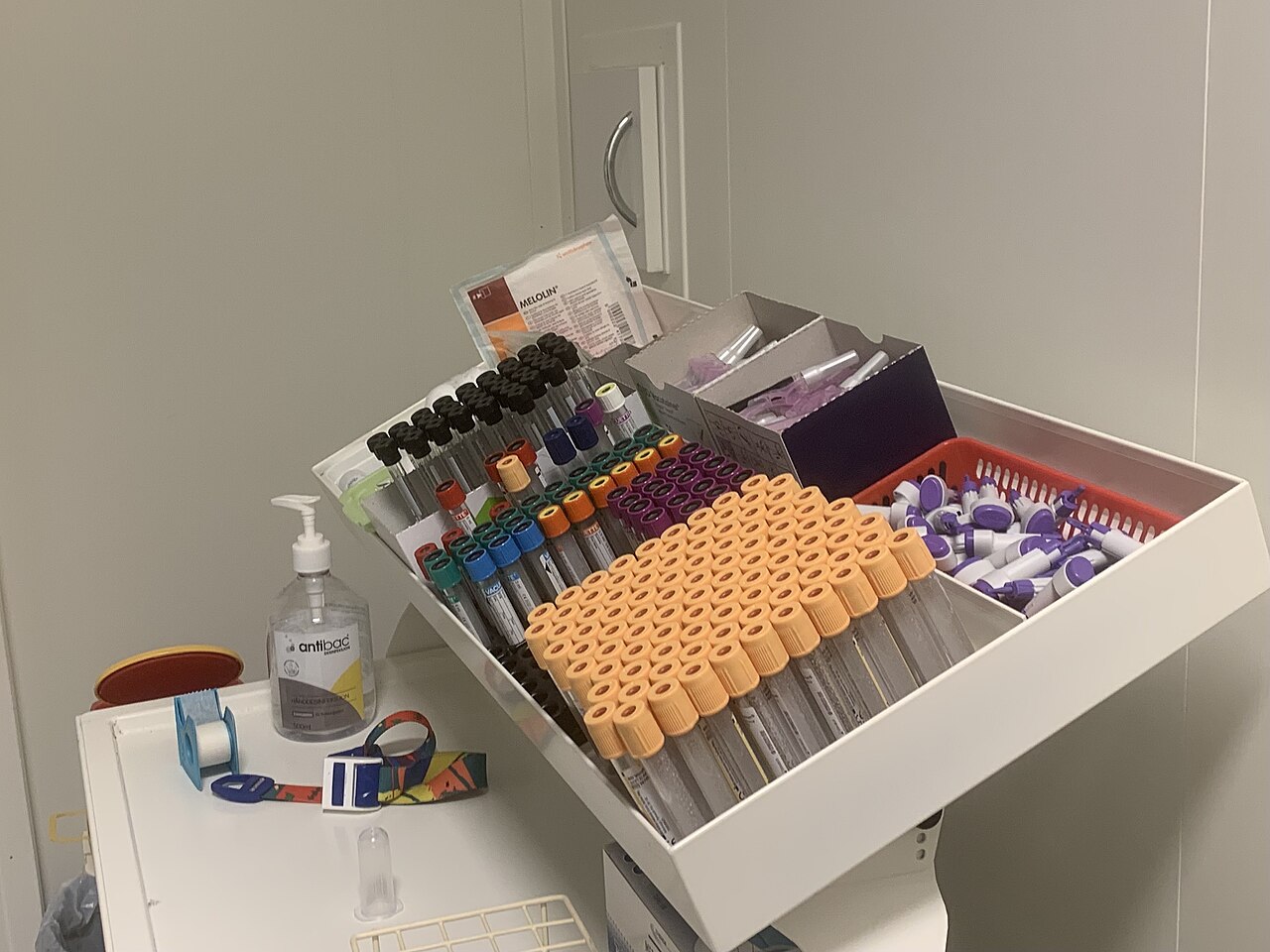
Photograph 1 of 3
Supplies before collection
A real clinic supply area in Norway. Recognize the equipment, then verify the local container, storage, cleaning, and collection requirements.
Photo: Marius Vassnes. Source · CC BY-SA 4.0.
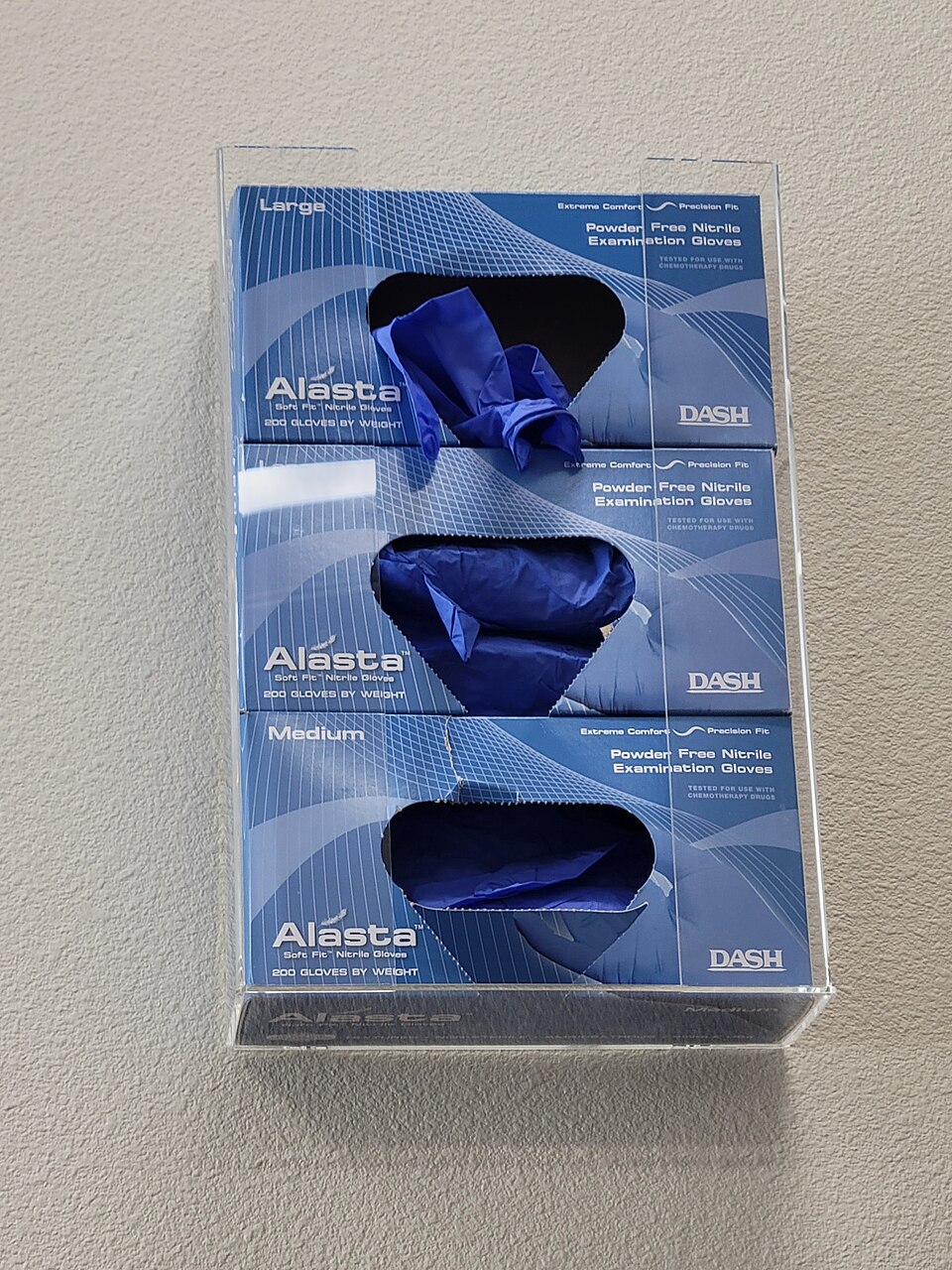
Photograph 2 of 3
Select the barrier before the task
The dispenser shows different glove sizes. Choose the approved type and fit for the task; this photograph does not demonstrate donning, removal, or barrier integrity.
Photo: Kiran891. Source · CC BY-SA 4.0.
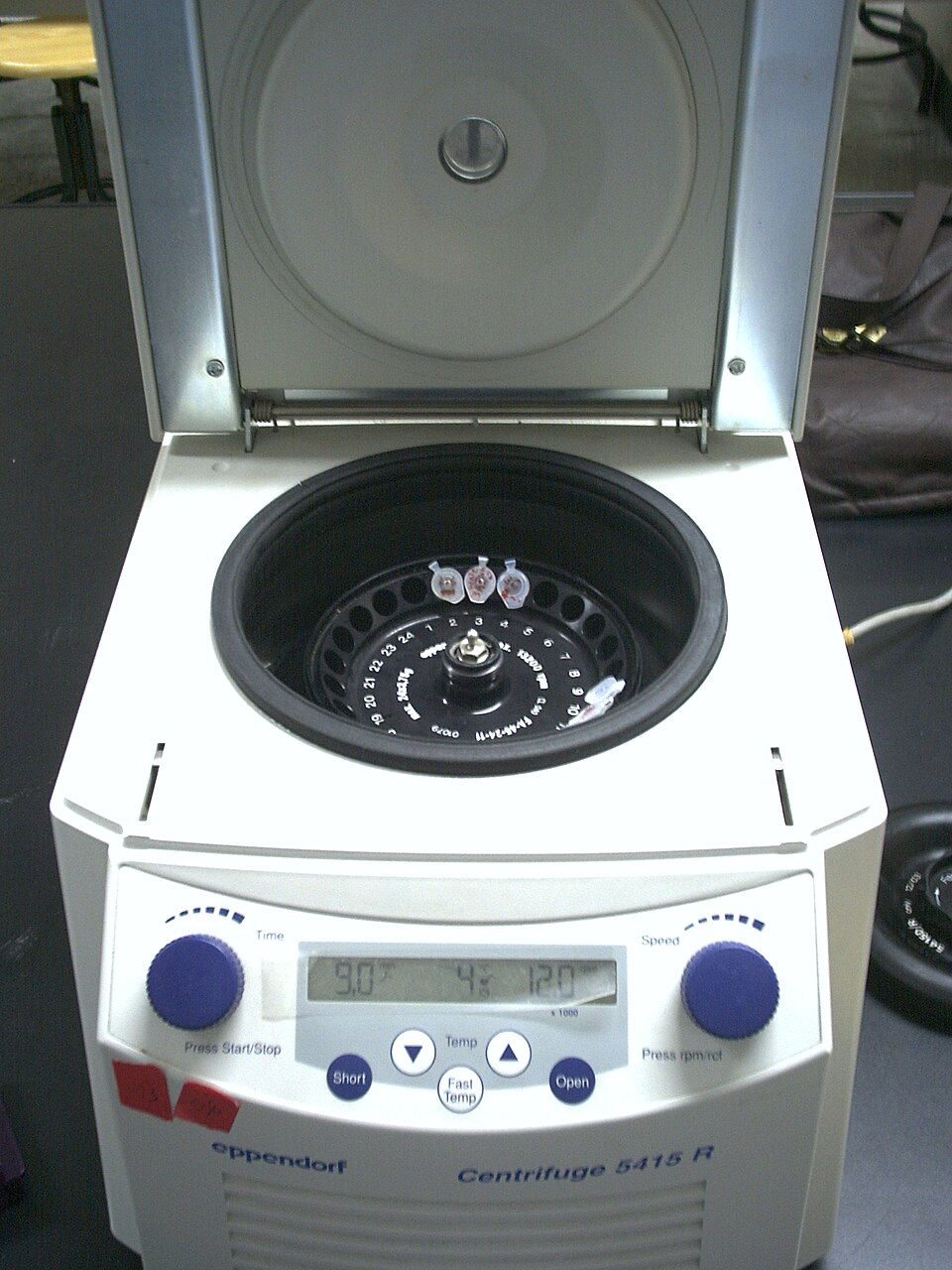
Photograph 3 of 3
The rotor and the program both matter
A research microcentrifuge, not a prescribed clinical blood-processing setup. The visible uneven tube arrangement and display must not be copied as a balanced load or validated program.
Photo: GOKLuLe. Source · CC BY-SA 3.0.
Which examination topics could you connect to these three scenes?
Supply verification connects to preparation and collection. Barrier selection connects to safety. The centrifuge connects to processing. One scene can involve several domains; it does not establish complete exam coverage.
Real photographs, source and depiction checked 2026-10-13. Images display in full without cropping. A photo can support observation; use the current procedure and device instructions for clinical work.
Deliberate practice
Learn it, then use it.
These are original study prompts, not recalled certification questions. Answer before opening the rationale.
By the end, you can
- Separate an exam blueprint from a guarantee about the exact questions you will receive.
- Use the current candidate handbook to confirm eligibility, scheduling, identification, and test-day policies.
- Turn a weak content area into a short practice-and-review loop.
Decision point
Your practice score is lower in safety than in collection technique. You are tempted to reread every lesson from the beginning. What is the more useful next study step?
Reveal the best next step and why
Best next step: Review the current published exam outline, complete a small safety-focused set, and write down why each missed option is unsafe or less appropriate before retesting.
Why: A targeted feedback loop identifies the decision rule you missed. A blueprint guides what to study; it does not reveal live exam items or replace the current candidate handbook.
Retrieval practice
1.What document should settle a question about eligibility or test-day rules?
The current official candidate handbook or exam guide.
2.What should you record after a missed practice item?
The decision rule and why the distractors are less safe or less appropriate.
Put this lesson into practice.
Try the sample questions, or unlock all lessons and listening paths.
Finished reading?
Next: Circulation and blood components